Monday, April 30, 2012
Sunday, April 29, 2012
Saturday, April 28, 2012
DEATH BY ENVIRONMENTALISM
Posted @ LUDWIG VON MISES INSTITUTE OF CANADA
Tuesday, April 24th, 2012 by Wlliam L. Anderson
Like those who were of age the day John F. Kennedy was assassinated, most people can remember intimate details of what they were doing when they first heard that the space shuttle Challenger had exploded. To compound the tragedy, millions of schoolchildren across the country watched the whole thing in shocked amazement.
The “teacher in space” program that NASA hoped would be a public relations boon to the shuttle program exploded with the shuttle as teacher Christa McCauliffe of New Hampshire was among the seven astronauts who perished when the shuttle disintegrated miles above the earth. While NASA went on to record many more space flights after the Challenger disaster, the program once again was shocked into reality when Columbia blew up in flames just minutes before landing, killing all seven astronauts aboard.
In writing about the latest NASA disaster in the Free Market, I pointed out the problems and depressing realities about socialist space travel. What I did not say was something that is even more depressing: the roots of both disasters were planted in the government’s environmental policies. Environmentalism not only killed 14 U.S. astronauts, but it killed them in a most horrible and public way.
As recent news reports have pointed out, the wreck of the Columbia was almost certainly due to a chunk of insulating foam coming loose and hitting some heat-protecting tiles, scattering them and leaving the spacecraft vulnerable to the intense heat it would experience upon re-entry into the earth’s atmosphere.
That is all that the mainstream news—and NASA—have been willing to report. What they have not said is that the particular foam that was in use at the time was an environmental substitute replacing a material that had worked well. However, the previous foam used to insulate the Columbia’s external fuel tanks contained Freon, which is a chlorofluorocarbon (CFC) that the EPA banned because of the ozone depletion scare.
As Steven Milloy reports, NASA could have sought an exemption. Freon, after all, is inert and nontoxic, and its connection to ozone depletion is tenuous at best. However, having been burned by the EPA once before (as I will point out), NASA succumbed to what Milloy calls “PC foam.” He writes, “PC foam was an immediate problem. The first mission with PC foam resulted in 11 times more damaged thermal tiles on Columbia than the previous mission with Freon-based foam.[1]
Furthermore, the damage was obvious—and quite severe. Milloy writes that following the 1997 Columbia mission, “more than 100 tiles were damaged beyond repair, well over the normal count of 40.”
I now examine the Challenger explosion, which occurred the week after the Super Bowl in January 1986. As nearly everyone familiar with the catastrophe knows, a set of O-rings that was supposed to keep hot gases trapped in the rocket carrying the shuttle failed, the fuel quickly leaking out and igniting into a fireball shortly after takeoff.
It was an unusually cold morning at Cape Canaveral, too cold for the O-rings to perform properly. That is well-known. What most people do not know is that the material used to make the O-rings was a substitute to replace a product that the Environmental Protection Agency had banned because it contained asbestos.
The original O-rings used between the rocket joints came from an over-the-counter putty that had been used safely and effectively for a long time. However, in its war against the use of asbestos anywhere, anytime, the EPA forbade NASA from using that product at all after the space agency had sought an exemption. The EPA, not surprisingly, refused that request, something that would ultimately lead to the next disaster 17 years later. The new product, not surprisingly, failed and we know the rest of the story.
In normal situations, this would be a scandal of epic proportions. A government agency requires the use of unsafe materials that lead to the very public deaths of 14 individuals. Had a private firm permitted these kinds of unsafe working conditions, the situation would be worthy of a New York Times investigative report. Instead, all we hear is silence, interspersed with “the show must go on” comments about the future of the space shuttle program. Even the news reports on the foam disaster have ignored the reason why NASA used such an unsafe product; in fact, mainstream reporters are not even asking the pertinent questions.
Countless writers on these pages and elsewhere have pointed out the high costs—and low benefits—of environmental laws and regulations. Environmentalism has become a sacrosanct religion of which no questions can even be asked.
Yet, we see once again that applied environmentalism can be disastrous. Granted, we are talking about the lives of “only” 14 people, compared to the hundreds of thousands that have died of malaria following the banning of DDT, which once effectively killed the mosquitoes that carry the disease.
Whether we speak of 14 astronauts, or 14,000 people in a remote African nation, however, we speak of the same thing: death by environmentalism. The verdict is in; environmentalism is not only hazardous to our health, it threatens our very lives.
William Anderson, an adjunct scholar of the Mises Institute, teaches economics at Frostburg State University. He blogs at krugman-in-wonderland.blogspot.com
Tuesday, April 24th, 2012 by Wlliam L. Anderson
Like those who were of age the day John F. Kennedy was assassinated, most people can remember intimate details of what they were doing when they first heard that the space shuttle Challenger had exploded. To compound the tragedy, millions of schoolchildren across the country watched the whole thing in shocked amazement.
The “teacher in space” program that NASA hoped would be a public relations boon to the shuttle program exploded with the shuttle as teacher Christa McCauliffe of New Hampshire was among the seven astronauts who perished when the shuttle disintegrated miles above the earth. While NASA went on to record many more space flights after the Challenger disaster, the program once again was shocked into reality when Columbia blew up in flames just minutes before landing, killing all seven astronauts aboard.
In writing about the latest NASA disaster in the Free Market, I pointed out the problems and depressing realities about socialist space travel. What I did not say was something that is even more depressing: the roots of both disasters were planted in the government’s environmental policies. Environmentalism not only killed 14 U.S. astronauts, but it killed them in a most horrible and public way.
As recent news reports have pointed out, the wreck of the Columbia was almost certainly due to a chunk of insulating foam coming loose and hitting some heat-protecting tiles, scattering them and leaving the spacecraft vulnerable to the intense heat it would experience upon re-entry into the earth’s atmosphere.
That is all that the mainstream news—and NASA—have been willing to report. What they have not said is that the particular foam that was in use at the time was an environmental substitute replacing a material that had worked well. However, the previous foam used to insulate the Columbia’s external fuel tanks contained Freon, which is a chlorofluorocarbon (CFC) that the EPA banned because of the ozone depletion scare.
As Steven Milloy reports, NASA could have sought an exemption. Freon, after all, is inert and nontoxic, and its connection to ozone depletion is tenuous at best. However, having been burned by the EPA once before (as I will point out), NASA succumbed to what Milloy calls “PC foam.” He writes, “PC foam was an immediate problem. The first mission with PC foam resulted in 11 times more damaged thermal tiles on Columbia than the previous mission with Freon-based foam.[1]
Furthermore, the damage was obvious—and quite severe. Milloy writes that following the 1997 Columbia mission, “more than 100 tiles were damaged beyond repair, well over the normal count of 40.”
I now examine the Challenger explosion, which occurred the week after the Super Bowl in January 1986. As nearly everyone familiar with the catastrophe knows, a set of O-rings that was supposed to keep hot gases trapped in the rocket carrying the shuttle failed, the fuel quickly leaking out and igniting into a fireball shortly after takeoff.
It was an unusually cold morning at Cape Canaveral, too cold for the O-rings to perform properly. That is well-known. What most people do not know is that the material used to make the O-rings was a substitute to replace a product that the Environmental Protection Agency had banned because it contained asbestos.
The original O-rings used between the rocket joints came from an over-the-counter putty that had been used safely and effectively for a long time. However, in its war against the use of asbestos anywhere, anytime, the EPA forbade NASA from using that product at all after the space agency had sought an exemption. The EPA, not surprisingly, refused that request, something that would ultimately lead to the next disaster 17 years later. The new product, not surprisingly, failed and we know the rest of the story.
In normal situations, this would be a scandal of epic proportions. A government agency requires the use of unsafe materials that lead to the very public deaths of 14 individuals. Had a private firm permitted these kinds of unsafe working conditions, the situation would be worthy of a New York Times investigative report. Instead, all we hear is silence, interspersed with “the show must go on” comments about the future of the space shuttle program. Even the news reports on the foam disaster have ignored the reason why NASA used such an unsafe product; in fact, mainstream reporters are not even asking the pertinent questions.
Countless writers on these pages and elsewhere have pointed out the high costs—and low benefits—of environmental laws and regulations. Environmentalism has become a sacrosanct religion of which no questions can even be asked.
Yet, we see once again that applied environmentalism can be disastrous. Granted, we are talking about the lives of “only” 14 people, compared to the hundreds of thousands that have died of malaria following the banning of DDT, which once effectively killed the mosquitoes that carry the disease.
Whether we speak of 14 astronauts, or 14,000 people in a remote African nation, however, we speak of the same thing: death by environmentalism. The verdict is in; environmentalism is not only hazardous to our health, it threatens our very lives.
William Anderson, an adjunct scholar of the Mises Institute, teaches economics at Frostburg State University. He blogs at krugman-in-wonderland.blogspot.com
Thursday, April 26, 2012
Tuesday, April 24, 2012
Tuesday, April 17, 2012
George Monbiot, Please Understand Objectivism Before Criticizing It.

Originally posted at the Ludwig von Mises Institute of Canada
George Monbiot, Please Understand Objectivism Before Criticizing It.
Friday, April 13th, 2012 by Julia Tourianski posted in Philosophy.
Philosophies need to be challenged. No philosophy has escaped criticism and no philosophy should escape it. One should never accept or reject an idea at face value; it must be dissected, analyzed and debated before conclusions are drawn. If the idea is unclear or inconsistent, this process becomes difficult, giving way to misinterpretation. Unfortunately, this happens to even the clearest ideas. In these cases, one has to wonder whether this occurs from an honest lack of understanding or if misinterpretation is a choice made in order to compliment an existing set of beliefs.
George Monbiot’s article “How Ayn Rand Became the New Right’s Version of Marx“opens by describing her philosophy of Objectivism as “the ugliest philosophy the postwar era has produced.” Yet when you read his reasons behind his name-calling, you wonder whether he has actually read any of her books. Instead of critiquing Ayn Rand’s ideas, he misinterprets them and critiques something else entirely. He invokes a typical straw man rather than delve into the core components of the philosophy. Any person who has taken the time to read Ayn Rand should be able to understand Objectivism as it is an uncomplicated, straightforward philosophy. Here is a quick breakdown of its main concepts.
Objectivism holds that there are objective truths independent of our perception, that A is A; that existence exists. If a tree falls and there’s no one around to hear it, does it make a sound? Yes.
 Objectivism redefines morality. Morality is based on reason, not emotions or dogma. It states that it is not a virtue to sacrifice oneself for another. When objectivism condemns sacrifice, it condemns irrationality. Sacrifice isn’t helping a friend with their homework, or an old lady across the street; these things are rational choices that make us feel good. Sacrifice is marrying someone you do not love to please them, or working your neighbor’s field to help his family while your family starves. It is immoral to be a “sacrificial animal.” This does not mean people shouldn’t be thoughtful and help each other, it only means that others are not born entitled to your help (this of course excludes children as one makes the choice to bring them into existence).
It is moral to act in rational self-interest. The individual is born with one responsibility: himself. You are not born to serve others, and others are not born to serve you. You are born entitled to achieve your own happiness; others are not entitled to rely on you to achieve theirs. It is moral to peruse things for your own benefit, as long as you do not impede on the rights of others to do the same. This is called the non-aggression principle. As long as you do not initiate force, you should be left to do what you wish.
Objectivism argues against rationalizing enslavement. Objectivism frees one to live by their own will, unchained from the wills of others. These ideas shake the foundations of religion, large government, post-modernism and collectivism. This direct endorsement of individual freedom has of course angered those who wish to keep people subservient and those who wish to live off of their fellow human beings.
George Monbiot accuses Ayn Rand’s philosophy of condemning empathy and compassion, when it only condemns sacrificing yourself for others. If Monbiot disagrees with this, he is entitled to his opinion, but he cannot extend his contempt to things Objectivism does not claim. He goes on to state that Objectivism maintains that the poor deserve to die. Not one of Ayn Rand’s books even alludes to this. In Atlas Shrugged, the poor working class is praised. They are described to be the victims of a growing, oppressive government. Their sufferings and deaths are a direct result of the crimes of Washington’s elite. Monbiot also states that Objectivism endorses the “unmediated power” for the rich. The entire story of Atlas Shrugged revolves around pointing out how detrimental things would become if we gave rich politicians unlimited power. This point is illustrated in the book’s train scene, something Monbiot too has chosen to misrepresent.
 Kip Chalmers, one of “Washington’s boys” sits on a broken down train, outraged that he is being prevented from getting to where he needs to go. He insists that the broken down diesel engine be replaced with the only alternative at the given time; a coal-burning engine. The workers explain to him that there is a long tunnel ahead, which can only be entered by a diesel-powered train due to safety hazards. He threatens the train workers to do as they are told. At this point in the story, work is scarce and the workers who are lucky enough to have a job can’t afford to lose it. No one wants to be responsible for upsetting someone with government connections; everyone is living in fear. So the train is fixed with a coal-burning engine and sent on its way through the tunnel. Almost everyone suffocates and dies.
What about having “the teacher who taught children to be team players” and the “mother who believed that she had the right to elect politicians, of whom she knew nothing,” die on the train? Maybe Monbiot has never heard of a metaphor before. Ayn Rand was not saying they deserved to die; she was illustrating that that these are the kind of ideas that lead to a society’s death. Should we thus conclude that any character who dies in any book means the author is implying they deserved it?
Predictably, Monbiot goes on to argue that Objectivism favours the “rich” over the “poor.” These terms are very naïve; people need to stop and think before using them. Conveniently, these loaded classifications are rarely defined. Who are these poor? Are they the oppressed majority of countries such as China, Cuba and North Korea? Are they the homeless of North America? Are they the welfare classes of England? Do they mean to claim that all these people are simply the “poor?” Is this not only extremely general but condescending? Should the benefit collector living in the comfortable government housing of Sweden be classified alongside with the starving orphan of Lesotho? Should the junkie who was born into abuse be classified alongside the idler who figured out that it’s easier to live off his peers than to work? Should the person who lost everything during an economic collapse be in the same category as the person who lost everything during a poker game?
And what about the rich? Who are these people we are told to distrust and hate? Are they bankers? Politicians? CEOs? Lobbyists? Heiresses? What about those who spent half their life with their noses in textbooks or their hands callused with work only to catch a break and profit from their efforts? What about doctors, business owners, entrepreneurs, artists, innovators, inventors, and columnists for the Guardian? Don’t these “rich” people outnumber the ones who gained their wealth by coercion? How can a philosophy favour or discriminate against such a grand diversity of individuals? It doesn’t. Monbiot once again oversteps his understanding of Objectivism.
Ayn Rand makes it clear what kind of people she praises and what kind of people she condemns. It is not rich vs. poor; it is creator vs. moocher, producer vs. parasite. In Atlas Shrugged, the biggest parasites are the government lobbyists, the career politicians, the people who got rich by coercion (Eugene Lawson, Tinky Holloway, Wesley Mouch). These people do not create anything; they live off the prosperity of the productive class while claiming to be superior in essence because they supposedly have no greed. This is illustrated in the novel by Hank Rearden’s family, specifically his brother, a man convinced to be entitled of Hank’s wealth because his work is non-profit. Objectivism holds that one has a right to be as charitable as they like but only with their own money. When charity is given by force, it is no longer charity but theft. Should I be allowed to take your car and give it to someone who doesn’t have a car? Is stealing justified if what you steal is selflessly given away? If your answer is yes, please email me your address and leave the key under the mat.
Hardworking individuals, rich, middle class or poor, do not deserve having their income stolen to support someone somewhere just because the government said so. They are the foundation of a thriving society and should not be punished for their achievements. This point is again made in Atlas Shrugged when a collectivist manufacturing company fails. When its workers begin being paid according to their need not skill, the company shuts down, turning everyone onto the street. The productive classes are the building blocks of societies and need to be respected, or at least, left alone.
Selfishness cannot be eliminated with preaching; it is in our nature to want to keep what we work for. People are selfish, independent of whether they are “poor” or “rich.” You may have noticed this if you have any friends or family. Objectivism embraces this instead of condemning it, arguing that greed and selfishness often drives people to create, thus injecting wealth into economies. People are also kind and empathetic by nature; something you may have also noticed if you have friends or family. Charity by the choice of the individual is how we better the world, not by theft and redistribution of wealth by the government. Some of the wealthiest people on this planet are also the most charitable. Perhaps George Monbiot has only heard of one millionaire, Alan Greenspan.
You can’t hold Objectivism accountable for something a corrupt, flip-flopping individual does. Ayn Rand’s novels not only condemn but warn against such people. In fact, she personally saw right through Greenspan. In a documented conversation between herself and Nathaniel Braden, Ayn Rand asked “Do you think Alan might basically be a social climber?” Ayn Rand believed in free-market capitalism, not the crony capitalism Greenspan endorses.

Monbiot scathingly accuses Ayn Rand to be a hypocrite because she took Medicare and security benefits near the end of her life. Does this negate everything she stood for? Well, she also paid taxes all her life, so following that logic, her ideas were worthless to begin with. If one lives in a communist state but holds the ideas of private property yet does not own private property, does it mean they are contradicting their own ideas? Karl Marx gained wealth by playing the stock market, does this mean all his ideas are worthless? Ayn Rand had to comply with the “realities” of the American System. Of course she subscribed to these benefits, she had been forced to pay into them her entire life.
The most inaccurate claim Monbiot makes is that Objectivism has “failed spectacularly and catastrophically.” How can something be killed off before its time? If Monbiot wants us to take this claim seriously, he should provide evidence of a large decrease of State power in correlation with the popularity of Ayn Rand’s ideas.
Objectivism is an unpracticed philosophy in America. America today consists of subsidizations, government created monopolies, high taxes, bail outs, huge violations of property and privacy rights, media censorship, manipulation of currency, and constant initiation of force against peaceful citizens and countries. These are hardly the teachings of Objectivism. Ayn Rand’s writings have accurately predicted what would become of capitalism if the government was to continue to grow. The world we live in today is an accurate reflection of the world John Galt was forced to escape in Atlas Shrugged.
“When you see that trading is done, not by consent, but by compulsion – when you see that in order to produce, you need to obtain permission from men who produce nothing – when you see that money is flowing to those who deal, not in goods, but in favors – when you see that men get richer by graft and by pull than by work, and your laws don’t protect you against them, but protect them against you – when you see corruption being rewarded and honesty becoming a self-sacrifice – you may know that your society is doomed.”-Ayn Rand
Objectivism did not fail; objectivism is part of the reason why America prospered and grew in the first place. The unrestrained accomplishments of the individual made America what it was. It was not built on the ideas of collectivism, or with the help of a large government. Objectivist ideas were formed in America years before Ayn Rand recognized them. She moved from Russia to escape the chains of collective thought and ended up identifying exactly what made America great; individual freedom.
Julia Tourianski immigrated to Canada in 1997. Coming from a family of small business owners, she has strived to achieve the same. She has been involved in a wide rage of projects in fields of film production, writing and marketing. She loves managing creative endeavours, and more significantly, shaping the projects themselves. Her spare time is dedicated to volunteering at Freedomain Radio and the Toronto Humane Society. She and her partner (Peter Reitano) run the site http://bravetheworld.com/
Wednesday, April 11, 2012
Impeach Obama 2012! Join The National Campaign!
Things to look up(besides his birth certificate):
Partiot Act
NDAA Bill
SOPA>>>CISPA
HR 347
New Obama Executive Order
Do the research yourself. Use your mind openly...search with enthusiasm and curiosity. Come up with your own conclusions using the one thing that separate you from the animals....REASON...your mind is your true means of survival.

Sunday, April 8, 2012
HUMAN IGNORANCE and SOCIAL ENGINEERING by Wendy McElroy
Originally posted on the Ludwig Von Mises Institute of Canada
Human Ignorance and Social Engineering
BY Wendy McElroy
Spontaneous order and the inadequacy of human knowledge.
Throughout most of intellectual history, society has been considered to be the result of someone’s design. In his multi-volume Law, Legislation, and Liberty, the social theorist F. A. Hayek referred to this position as “constructivist rationalism” and argued vigorously against it. In his 1974 Nobel Memorial Lecture, titled “The Pretence of Knowledge,” Hayek expressed a different view of how society developed:
The recognition of the insuperable limits to his knowledge ought indeed to teach the student of society a lesson in humility which should guard him against becoming an accomplice in men’s fatal striving to control society—a striving which makes him not only a tyrant over his fellows, but which may well make him the destroyer of a civilization which no brain has designed but which has grown from the free efforts of millions of individuals.
Hayek opposed any attempt to engineer—that is, centrally to plan and to coordinate—the structure of society. He believed that such engineering actually destroyed rather than created society, which was the result of human action but not of human design. Alongside the Austrian economist Ludwig von Mises, Hayek provided what are arguably the best critiques of the “constructivist” theories and policies that have grown in popularity during the twentieth century.
Both Hayek and Mises had witnessed the devastation of classical liberalism by two world wars, but most particularly by World War I. Wartime governments had clamped centralized control over the private sector to ensure a continuing flow of armaments and the other goods deemed necessary for victory. Governments had inflated their money supplies to pay for massive military buildups. And war had strangled the flow of free trade that classical liberals considered to be a prerequisite to peace, prosperity, and freedom. In short, both Hayek and Mises had watched twentieth-century statism replacing nineteenth-century classical liberalism.
If war is the health of the state, as the American individualist Randolph Bourne declared, then Hayek and Mises witnessed the impact of an obvious corollary: namely, that war is the death of individual liberty. And social engineering was a key mechanism through which that freedom was destroyed. Indeed, one of Mises’s earliest works, Nation, State, and Economy (1919), analyzed the disastrous consequences of the central planning ushered in by World War I.
But Hayek and Mises did not merely oppose social engineering on utilitarian grounds. Independently, they each evolved complex and sophisticated systems of social theory to explain how the institutions of society naturally evolved. They maintained that the institutions of a healthy society were the collective and unintended results of human action. Complex social phenomena—such as law, language, and money—were especially the unintended consequences of individual interactions. For example, no committee or central authority decided to invent human speech, let alone to design a language as complicated as English. Acting solely to achieve their own ends, individuals began making sounds to facilitate getting what they wanted from other people. Thus, speech was the result of human action but not of human design, and it naturally evolved into language. The evolution may not have proceeded with scientific efficiency, but it was efficient enough to permit the development of civilization. The efficiency of government programs suffers by comparison.
Yet constructivists argued that an unplanned society is wasteful and chaotic. With sufficient knowledge, they could engineer a perfectly efficient society. There would be no more surpluses or scarcities. Stock markets would not crash, and currencies would not fluctuate. Perhaps society could even be designed so that its members walked in unison toward desirable social goals, just as they had marched together toward victory in wartime.
Hayek bluntly stated that the knowledge constructivists sought was unattainable. It was not possible to plan the dynamics of tomorrow based on how people acted yesterday. People were unpredictable. Human beings were fundamentally different from the physical objects examined by the hard sciences. A scientist could learn everything he needed to know about the movement of an object, and his knowledge would not necessarily change over time. But human beings acted on psychological factors and motivations that were hidden, often even from themselves. Society did not consist of objects that could be neatly categorized and made to obey the laws of science. Society consisted of erratic and unpredictable individuals.
Mises made a similar point in regard to monetary theory. He demonstrated that even the seemingly objective tool of monetary calculation—the sort that people use informally to decide, say, whether to ask for a raise—is ineffective for broader social planning. At best, prices were a historical record; the price of bread is a past price, even if the past was very recent. This information could create anticipation of what the price of bread might be tomorrow, but it could predict nothing. A bread shortage might make the price sky-rocket. Moreover, using yesterday to engineer tomorrow went against a fundamental tenet of human action: the principle of inevitable change.
In Human Action: A Treatise on Economics (1949), Mises commented, “Human action originates change. As far as there is human action there is no stability, but ceaseless alteration. . . . The prices of the market are historical facts expressive of a state of affairs that prevailed at a definite instant of the irreversible historical process. . . . In the imaginary—and, of course, unrealizable—state of rigidity and stability there are no changes to be measured. In the actual world of permanent change there are no fixed points. . . .”
From Nation, State, and Economy through to his magnum opus, Human Action, Mises eloquently argued against the possibility of acquiring enough knowledge to engineer society. Equally, in Hayek’s work The Sensory Order: An Inquiry into the Foundations of Theoretical Psychology (1952, but apparently based on work he did in 1919 and 1920) to his far more popular The Road to Serfdom(1944), he integrated such diverse fields as epistemology and economics to form a social theory that denied any validity to central planning.
Throughout the work of these theorists, two closely related concepts emerge again and again: methodological individualism and spontaneous order. These concepts are key to understanding why Hayek and Mises so adamantly rejected social engineering.
Methodological Individualism
In Human Action, Mises offered a description of what he called “The Principle of Methodological Individualism”: “First we must realize that all actions are performed by individuals. . . . If we scrutinize the meaning of the various actions performed by individuals we must necessarily learn everything about the actions of collective wholes. For a social collective has no existence and reality outside of the individual members’ actions.”
Mises claimed that collective wholes—such as “the family” or “society”—were nothing more than the sum of the individual members who comprised them. Such wholes were abstractions useful for indicating the interaction of people in a specific context. “Family” indicates one set of interactions, “bridge club” another.
In reducing group functioning to its most basic element—the acts of individuals—Mises did not deny the importance of collective wholes. Quite the contrary. Mises explained, “Methodological individualism, far from contesting the significance of such collective wholes, considers it as one of its main tasks to describe and to analyze their becoming and their disappearing, their changing structures, and their operation. And it chooses the only method fitted to solve this problem satisfactorily.”
In other words, methodological individualism was a powerful analytical tool that could be used to discover the principles on which a group of people interacted. It was the best method by which to understand society.
Mises’s stress upon methodological individualism did not arise in a vacuum but rather in response to the theory of social holism that had become popular in the early twentieth century. Social holists claimed that collective wholes had an existence far greater than the sum of their individual parts. They drew parallels between the fields of biology and sociology. They argued that just as higher level principles of explanation were needed to describe a complex biological organism than were used to explain the molecules that comprise it, so too with human society. New principles and characteristics emerged within a society that were entirely different from those that applied to individuals. In other words, there were rules that applied only to collective wholes and not to individual members. Further, these emergent rules functioned along scientific lines and responded to methods of planning.
The Individual as Abstraction
With the rise of Marxism, those who favored methodological individualism were often accused of “atomism” or reductionism. Marxists went so far as to assert that it was the individual, and not society, that was the true abstraction. In its extreme form, these social holists even denied that the individual existed without society. As Mises observed, “The notion of an individual, say the critics, is an empty abstraction. Real man is necessarily always a member of a social whole.”
Karl Marx argued this point by using a sort of Robinson Crusoe example. Marx contended that an individual who grew up in isolation on a desert island would not be a human being. The crux of his argument was that human beings are social organisms—social constructs, if you will—who cannot be lifted from their defining context and remain human beings. The adult Robinson Crusoe was clearly a human being, but his humanity resulted from a prior history of socialization. Language, thought, art—all that made Crusoe human had resulted from his life in community. Reversing Misesian logic, Marx claimed that the collective whole called “society” created its individual members, who could be understood only by examining the rules of that society. Marx went an extra step and tried to extend the principles and methodology of the hard sciences—such as predictability and control—to society.
Classical liberals countered that a person who had been raised in utter isolation would still be a human being. For example, he would have a scale of preferences and would act to achieve the highest one first. True, without social interaction, major potentialities within the person’s humanity would never develop or be expressed. For example, there would be no reason to develop language skills and no possibility of becoming a parent. Were the isolated individual to be rescued and placed within society, however, his unexpressed potentials might well emerge. But whatever characteristics developed would emerge from his own inherent potential as a human being and they would be the result of the individual interactions he experienced. The characteristics would not emerge because a collective whole called “society” defined them into existence.
Classical liberals did not dispute the claim that groups had a cumulative dynamic that was different than the dynamic of man in isolation. After all, only in society did intellectual and economic exchanges arise. But they believed that the differences could be explained by breaking the group dynamic down into the intricate interactions of the individuals who comprised it. For example, everything about a conversation could be broken down into the statements, body language, and other actions of the individuals involved. Nothing about the conversation required further principles of explanation.
This methodological approach worked in analyzing even extremely complex collective wholes such as “the state.” Everything the state did or was could be reduced to individual actions. As Mises explained, “The hangman, not the state, executes a criminal. It is the meaning of those concerned that discerns in the hangman’s action an action of the state.” Individuals who look at the hangman see the state in action only because an abstraction known as “the state” provides a context for his action. Equally, people never truly see or hear a group conversation. All they see or hear are individuals speaking, and we label the sum of their exchange a “group conversation.”
Methodological individualism had profound implications for social-engineering theory. If collective wholes were a “mental process” within individuals rather than concrete entities with independent existence, then it made no sense to claim there were unique rules and characteristics that applied to collectives and not to individuals. Methodological individualism removed the collective wholes from an objective realm ruled by scientific principles and returned it to the subjective realm of human judgment and preference. Instead of being able to design social institutions, such as banks, to run along scientific principles, social engineers were reduced to regulating individuals. They were engaged in planning how human beings would express their preferences in the future—a knowledge that individuals themselves rarely possessed.
And yet, a question remains. Without planning, how can society improve? Part of the answer is to be found in the second concept running throughout the work of Hayek and Mises.
Spontaneous Order
During the eighteenth century, theorists like Adam Smith began to examine the impact that the unintended consequences of human action had upon society. These were the collective consequences that accrued as a result of people pursuing their own individual interests. For example, if twenty people walked the shortest distance across a field, a crude path through the field would be established. But forging the path would be an unintended consequence of each person’s conscious goal—to reach the other side quickly.
Smith came to believe that society and its institutions could be best understood by reference to such unintended consequences. Consider the price of yesterday’s bread. No one legislated what you were willing to pay for bread yesterday. That price resulted from such unpredictable factors as how highly you prized bread twenty-four hours ago. The social institution of price, therefore, had been established spontaneously. It was also self-correcting; that is, the price spontaneously and rapidly fluctuated to reflect changing factors, such as the availability of bread. And because such changes were unpredictable, only a spontaneous response—not a preplanned one—could adequately respond.
No contemporary writer has explored the idea of spontaneous and self-correcting social institutions in greater depth than Hayek. In his essay “Principles of a Liberal Social Order,” Hayek tackled an objection he often encountered. He wrote, “Much of the opposition to a system of freedom under general laws arises from the inability to conceive of an effective co-ordination of human activities without deliberate organization by a commanding intelligence” (Studies in Philosophy, Politics and Society, 1960).
For social holists, “order” and “efficiency” were concepts that seemed to be wedded together. Mises and Hayek agreed, but they used a different definition of “order.” For social holists, the word seemed to conjure up quasi-military visions of society marching shoulder to shoulder toward a common goal. It was embodied in five-year plans that reduced the functioning of society to mathematical equations. By contrast, the order espoused by Mises and Hayek was a spontaneous one in which individuals pursued their own diverse interests without coordination by a central authority.
What does such an order look like? A classic example is the New York Stock Exchange, which was created as a location at which stocks could be bought and sold Monday to Friday from 9 a.m. to 4 p.m. No overriding authority set prices, volume limits, etc. These were established by pockets of people who pursued their own preferences in a manner resembling chaos. In yelling out on the floor that he was willing to buy ABC stock at X price, a trader intended to pursue nothing more than the preferences of his client. But an unintended consequence of his action was the establishment of an overall price for ABC stock.
Spontaneous order can resemble chaos. In Hayek’s words, it is the sort of order “whose justification in the particular instant may not be recognizable, and which will . . . often appear unintelligible and irrational” (“Individualism True and False” in Individualism and Economic Order, 1948). Ironically, this resemblance to chaos may indicate an aspect of why spontaneous order is efficient. After all, the shifting circumstances to which this sort of order responds have no logical or predictable order. Just as the trading floor of a stock exchange cannot be run according to Miss Manners’ rules of etiquette, so too does a dynamic society require institutions with fluidity.
Indeed, the main advantage of a decentralized system of decision-making may well be its ability to adjust constantly and quickly to shifting circumstances. Where social engineering demands a stable future and a godlike knowledge of the present, spontaneous order recognizes and embodies the inevitability of change and the inadequacy of human knowledge.
An individual knows as much as it is possible to know about his own preferences and future acts. The further you move away from the individual, the less reliable the data become—and the less perfect the consequences of decision-making.
Diverging from a Common Point
There is a sense in which both Hayek and Mises based their arguments for individual liberty on human ignorance. In The Constitution of Liberty (1960), Hayek acknowledges that the need for freedom “rests chiefly on the recognition of the inevitable ignorance of all of us concerning a great many of the factors on which the achievement of our ends and welfare depends.” Ironically, constructivists make much the same argument for their position: human beings are not naturally perfect, therefore society must be engineered and designed. From a point of common agreement—namely, the inadequacy of human knowledge—the two sides reach diametrically opposed conclusions.
Thursday, April 5, 2012
Project Peace On Earth
Project Peace On Earth (PPOE) Musical Ambassadors. Beautiful music. Just thought I'd share.
Edward Sharpe & the Magnetic Zeros "Carries On" Live Acoustic
Edward_Sharpe_and_the_Magnetic_Zeros
Lead Singer:Alexander Ebert
Truth
The truth is that I never shook my shadow
Every day it's trying to trick me into doing battle
Calling out "faker" only get me rattled
Want to pull me back behind the fence with the cattle
Building your lenses
Digging your trenches
Put me on the front line
Leave me with a dumb mind
With no defenses
But your defenses
If you can't stand to feel the pain then you are senseless
Since this
I've grown up some
Different kind of fighter
And when the darkness come let it inside you
Your darkness is shining
My darkness is shining
Have faith in myself
Truth
I've seen a million numbered doors on the horizon
Now which is the future you choosen before you gone dying.
I'll tell you 'bout a secret I've been underminding
Every little lie in this world come from dividing
Say you're my lover, say you're my homie,
Tilt my chin back slit my throat take a bath in my blood get to know me
All out of my secrets
All my enemies are turning into my teachers.
Because, lights blinding, no way dividing what's yours or mine when everything's shining
You darkness is shining my darkness is shining
Have faith in ourselves
Truth
Yes I'm only loving, only trying to only love
That's what I'm trying to do is only loving
Yes I'm only lonely loving feeling only loving
Till I'm feeling only loving
Ya say it ain't loving ain't loving my loving
But I'm only loving only loving only loving
Only loving the truth.
Sunday, April 1, 2012
ONE OF THE MOST INSPIRATIONAL MEN ON THE PLANET TODAY- DR. RON PAUL
Dr. Ron Paul.
He is consistent and has been for over 30 years. He has not run with the irrational and/or paid off politicians but challenged them all. He has stood against the crowd, the mob of men whom he knows are wrong and headed for ultimate crisis. He defends the Consitution, stands for reason, rights, and sound money. He explains all of his stances with reason and clarity. He does not try to avoid questions. His philosophies are sound. The economic Austrian School theorists like Peter Schiff, Ron Paul, and the father's of Austrian economics (i.e.. Ludwig Von Mises, F.A. Hayek, and Murray Rothbard) have all predicted the current state of the America's to date. If you have not watched this movie, WATCH IT NOW...and if you have...I am sure you have been inspired to learn more and more and are wanted to make a difference in your world. At this point I cannot say enough about the man...watch.
He is consistent and has been for over 30 years. He has not run with the irrational and/or paid off politicians but challenged them all. He has stood against the crowd, the mob of men whom he knows are wrong and headed for ultimate crisis. He defends the Consitution, stands for reason, rights, and sound money. He explains all of his stances with reason and clarity. He does not try to avoid questions. His philosophies are sound. The economic Austrian School theorists like Peter Schiff, Ron Paul, and the father's of Austrian economics (i.e.. Ludwig Von Mises, F.A. Hayek, and Murray Rothbard) have all predicted the current state of the America's to date. If you have not watched this movie, WATCH IT NOW...and if you have...I am sure you have been inspired to learn more and more and are wanted to make a difference in your world. At this point I cannot say enough about the man...watch.
What is MONEY? Answer by Francisco D'Anconia (Ayn Rand - Atlas Shrugged)
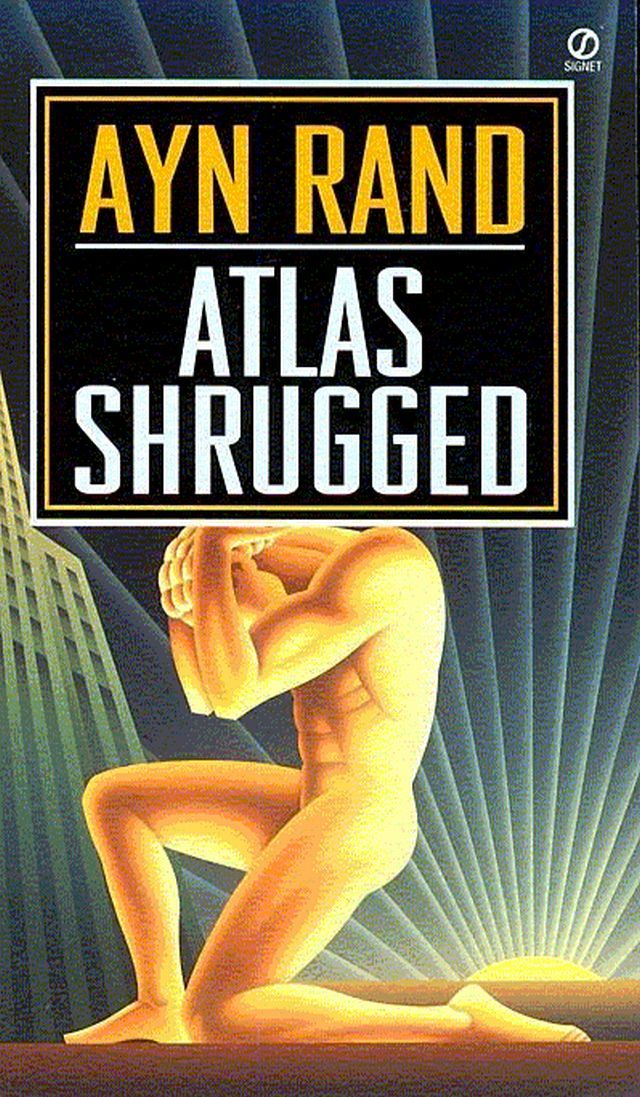
Francisco D'Anconia's Money Speech
"Don't let him disturb you. You know, money is the root of all evil – and he's the typical product of money."
Rearden did not think that Francisco could have heard it, but he saw Francisco turning to them with a gravely courteous smile.
"So you think that money is the root of all evil?" said Francisco d'Aconia. "Have you ever asked what is the root of money? Money is a tool of exchange, which can't exist unless there are goods produced and men able to produce them. Money is the material shape of the principle that men who wish to deal with one another must deal by trade and give value for value. Money is not the tool of the moochers, who claim your product by tears, or of the looters, who take it from you by force. Money is made possible only by the men who produce. Is this what you consider evil?
"When you accept money in payment for your effort, you do so only on the conviction that you will exchange it for the product of the effort of others. It is not the moochers or the looters who give value to money. Not an ocean of tears nor all the guns in the world can transform those pieces of paper in your wallet into the bread you will need to survive tomorrow. Those pieces of paper, which should have been gold, are a token of honor – your claim upon the energy of the men who produce. Your wallet is your statement of hope that somewhere in the world around you there are men who will not default on that moral principle which is the root of money. Is this what you consider evil?
"Have you ever looked for the root of production? Take a look at an electric generator and dare tell yourself that it was created by the muscular effort of unthinking brutes. Try to grow a seed of wheat without the knowledge left to you by men who had to discover it for the first time. Try to obtain your food by means of nothing but physical motions – and you'll learn that man's mind is the root of all the goods produced and of all the wealth that has ever existed on earth.
"But you say that money is made by the strong at the expense of the weak? What strength do you mean? It is not the strength of guns or muscles. Wealth is the product of man's capacity to think. Then is money made by the man who invents a motor at the expense of those who did not invent it? Is money made by the intelligent at the expense of the fools? By the able at the expense of the incompetent? By the ambitious at the expense of the lazy? Money is made – before it can be looted or mooched – made by the effort of every honest man, each to the extent of his ability. An honest man is one who knows that he can't consume more than he has produced.
"To trade by means of money is the code of the men of good will. Money rests on the axiom that every man is the owner of his mind and his effort. Money allows no power to prescribe the value of your effort except by the voluntary choice of the man who is willing to trade you his effort in return. Money permits you to obtain for your goods and your labor that which they are worth to the men who buy them, but no more. Money permits no deals except those to mutual benefit by the unforced judgment of the traders. Money demands of you the recognition that men must work for their own benefit, not for their own injury, for their gain, not their loss – the recognition that they are not beasts of burden, born to carry the weight of your misery – that you must offer them values, not wounds – that the common bond among men is not the exchange of suffering, but the exchange of goods. Money demands that you sell, not your weakness to men's stupidity, but your talent to their reason; it demands that you buy, not the shoddiest they offer, but the best your money can find. And when men live by trade – with reason, not force, as their final arbiter – it is the best product that wins, the best performance, then man of best judgment and highest ability – and the degree of a man's productiveness is the degree of his reward. This is the code of existence whose tool and symbol is money. Is this what you consider evil?
"But money is only a tool. It will take you wherever you wish, but it will not replace you as the driver. It will give you the means for the satisfaction of your desires, but it will not provide you with desires. Money is the scourge of the men who attempt to reverse the law of causality – the men who seek to replace the mind by seizing the products of the mind.
"Money will not purchase happiness for the man who has no concept of what he wants; money will not give him a code of values, if he's evaded the knowledge of what to value, and it will not provide him with a purpose, if he's evaded the choice of what to seek. Money will not buy intelligence for the fool, or admiration for the coward, or respect for the incompetent. The man who attempts to purchase the brains of his superiors to serve him, with his money replacing his judgment, ends up by becoming the victim of his inferiors. The men of intelligence desert him, but the cheats and the frauds come flocking to him, drawn by a law which he has not discovered: that no man may be smaller than his money. Is this the reason why you call it evil?
"Only the man who does not need it, is fit to inherit wealth – the man who would make his own fortune no matter where he started. If an heir is equal to his money, it serves him; if not, it destroys him. But you look on and you cry that money corrupted him. Did it? Or did he corrupt his money? Do not envy a worthless heir; his wealth is not yours and you would have done no better with it. Do not think that it should have been distributed among you; loading the world with fifty parasites instead of one would not bring back the dead virtue which was the fortune. Money is a living power that dies without its root. Money will not serve that mind that cannot match it. Is this the reason why you call it evil?
"Money is your means of survival. The verdict which you pronounce upon the source of your livelihood is the verdict you pronounce upon your life. If the source is corrupt, you have damned your own existence. Did you get your money by fraud? By pandering to men's vices or men's stupidity? By catering to fools, in the hope of getting more than your ability deserves? By lowering your standards? By doing work you despise for purchasers you scorn? If so, then your money will not give you a moment's or a penny's worth of joy. Then all the things you buy will become, not a tribute to you, but a reproach; not an achievement, but a reminder of shame. Then you'll scream that money is evil. Evil, because it would not pinch-hit for your self-respect? Evil, because it would not let you enjoy your depravity? Is this the root of your hatred of money?
"Money will always remain an effect and refuse to replace you as the cause. Money is the product of virtue, but it will not give you virtue and it will not redeem your vices. Money will not give you the unearned, neither in matter nor in spirit. Is this the root of your hatred of money?
"Or did you say it's the love of money that's the root of all evil? To love a thing is to know and love its nature. To love money is to know and love the fact that money is the creation of the best power within you, and your passkey to trade your effort for the effort of the best among men. It's the person who would sell his soul for a nickel, who is the loudest in proclaiming his hatred of money – and he has good reason to hate it. The lovers of money are willing to work for it. They know they are able to deserve it.
"Let me give you a tip on a clue to men's characters: the man who damns money has obtained it dishonorably; the man who respects it has earned it.
"Run for your life from any man who tells you that money is evil. That sentence is the leper's bell of an approaching looter. So long as men live together on earth and need means to deal with one another – their only substitute, if they abandon money, is the muzzle of a gun.
"But money demands of you the highest virtues, if you wish to make it or to keep it. Men who have no courage, pride, or self-esteem, men who have no moral sense of their right to their money and are not willing to defend it as they defend their life, men who apologize for being rich – will not remain rich for long. They are the natural bait for the swarms of looters that stay under rocks for centuries, but come crawling out at the first smell of a man who begs to be forgiven for the guilt of owning wealth. They will hasten to relieve him of the guilt – and of his life, as he deserves.
"Then you will see the rise of the double standard – the men who live by force, yet count on those who live by trade to create the value of their looted money – the men who are the hitchhikers of virtue. In a moral society, these are the criminals, and the statutes are written to protect you against them. But when a society establishes criminals-by-right and looters-by-law – men who use force to seize the wealth of disarmed victims – then money becomes its creators' avenger. Such looters believe it safe to rob defenseless men, once they've passed a law to disarm them. But their loot becomes the magnet for other looters, who get it from them as they got it. Then the race goes, not to the ablest at production, but to those most ruthless at brutality. When force is the standard, the murderer wins over the pickpocket. And then that society vanishes, in a spread of ruins and slaughter.
"Do you wish to know whether that day is coming? Watch money. Money is the barometer of a society's virtue. When you see that trading is done, not by consent, but by compulsion – when you see that in order to produce, you need to obtain permission from men who produce nothing – when you see that money is flowing to those who deal, not in goods, but in favors – when you see that men get richer by graft and by pull than by work, and your laws don't protect you against them, but protect them against you – when you see corruption being rewarded and honesty becoming a self-sacrifice – you may know that your society is doomed. Money is so noble a medium that it does not compete with guns and it does not make terms with brutality. It will not permit a country to survive as half-property, half-loot.
"Whenever destroyers appear among men, they start by destroying money, for money is men's protection and the base of a moral existence. Destroyers seize gold and leave to its owners a counterfeit pile of paper. This kills all objective standards and delivers men into the arbitrary power of an arbitrary setter of values. Gold was an objective value, an equivalent of wealth produced. Paper is a mortgage on wealth that does not exist, backed by a gun aimed at those who are expected to produce it. Paper is a check drawn by legal looters upon an account which is not theirs: upon the virtue of the victims. Watch for the day when it becomes, marked: 'Account overdrawn.'
"When you have made evil the means of survival, do not expect men to remain good. Do not expect them to stay moral and lose their lives for the purpose of becoming the fodder of the immoral. Do not expect them to produce, when production is punished and looting rewarded. Do not ask, 'Who is destroying the world?' You are.
"You stand in the midst of the greatest achievements of the greatest productive civilization and you wonder why it's crumbling around you, while you're damning its life-blood – money. You look upon money as the savages did before you, and you wonder why the jungle is creeping back to the edge of your cities. Throughout men's history, money was always seized by looters of one brand or another, but whose method remained the same: to seize wealth by force and to keep the producers bound, demeaned, defamed, deprived of honor. That phrase about the evil of money, which you mouth with such righteous recklessness, comes from a time when wealth was produced by the labor of slaves – slaves who repeated the motions once discovered by somebody's mind and left unimproved for centuries. So long as production was ruled by force, and wealth was obtained by conquest, there was little to conquer. Yet through all the centuries of stagnation and starvation, men exalted the looters, as aristocrats of the sword, as aristocrats of birth, as aristocrats of the bureau, and despised the producers, as slaves, as traders, as shopkeepers – as industrialists.
"To the glory of mankind, there was, for the first and only time in history, a country of money – and I have no higher, more reverent tribute to pay to America, for this means: a country of reason, justice, freedom, production, achievement. For the first time, man's mind and money were set free, and there were no fortunes-by-conquest, but only fortunes-by-work, and instead of swordsmen and slaves, there appeared the real maker of wealth, the greatest worker, the highest type of human being – the self-made man – the American industrialist.
"If you ask me to name the proudest distinction of Americans, I would choose – because it contains all the others – the fact that they were the people who created the phrase 'to make money'. No other language or nation had ever used these words before; men had always thought of wealth as a static quantity – to be seized, begged, inherited, shared, looted, or obtained as a favor. Americans were the first to understand that wealth has to be created. The words 'to make money' hold the essence of human morality.
"Yet these were the words for which Americans were denounced by the rotted cultures of the looters' continents. Now the looters' credo has brought you to regard your proudest achievements as a hallmark of shame, your prosperity as guilt, your greatest men, the industrialists, as blackguards, and your magnificent factories as the product and property of muscular labor, the labor of whip-driven slaves, like the pyramids of Egypt. The rotter who simpers that he sees no difference between the power of the dollar and the power of the whip, ought to learn the difference on his own hide – as, I think, he will.
"Until and unless you discover that money is the root of all good, you ask for your own destruction. When money ceases to be the tool by which men deal with one another, then men become the tools of men. Blood, whips and guns – or dollars. Take your choice – there is no other – and your time is running out."
Subscribe to:
Comments (Atom)